The published answers to this question are ranges wide enough to be useless. What travels is the structure: once you know how the money is built, you can put your own market’s numbers into it and get a figure that applies to your diary.
Revenue Is Events Times Package, and Neither Is Free
Two variables decide everything: how many events you work, and what each one is worth.
Operators fixate on the second and ignore the first, which is backwards. The number of events is capped by something real: Saturdays. A photo booth business is a weekend business in a seasonal industry, and no amount of pricing skill adds weekends to the year.
That cap is why the two genuine growth levers are a higher package price and a second machine that lets you take two bookings on the same night. Everything else is optimisation around the edges.
What Comes Out of Each Event
- Media, if you print. A known, exact number per print. The one cost that grows with how good the party is.
- Travel, including your time getting there.
- Staff, if you attend or send someone. Weddings usually need an attendant.
- Depreciation, spread across the events the machine will do in its life.
- Everything annual, divided by your events: insurance, software, website, spares, storage, accounting.
Operators who feel busy but broke are almost always ignoring the last two. Annual costs divided by twelve events is a very different number from the same costs divided by forty, and that division is most of what photo booth business profitability comes down to.
Is a Photo Booth Business Profitable, and How Fast
Take the purchase price, subtract nothing, and divide by your margin per event. That is your payback in events, and it is a much more honest metric than any percentage.
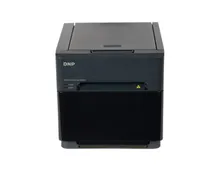
With professional equipment starting at €2,359 plus VAT and wedding packages sitting at the top of the market, the arithmetic usually lands inside a single busy season, which is why this business attracts people. It also means the machine is only cheap if you fill the calendar, and filling the calendar is the actual job. See how much a photo booth costs for the purchase side and how to get bookings for the hard part.
Season Length Is the Hidden Variable
Two operators with identical equipment and identical prices can end the year with very different numbers, because one works a market with a long wedding season and a strong corporate autumn, and the other works one with four good months.
A short season is fixed by adding a market that peaks when weddings do not: corporate events, Christmas parties and brand activations, which is where the 360 format and AI experiences earn their keep, or a vending unit that takes photo booth business income on weekdays without you standing next to it.
What Actually Separates the Ones Who Do Well
They price on value, not hours. A package sells; an hourly rate gets negotiated.
They are easy to book. They reply fast, with a clear number, and the client stops looking.
They own their referral sources. Venues and photographers feed them work every season without an advertising budget.
They do not treat the equipment as an expense. A booth that fails at an event costs a referral network, not a repair bill.
The Realistic Version
The first season pays for the machine if you work at it. The second season is where the money is, because the referrals from the first one arrive without costing anything. Anyone asking how much can you make with a photo booth business is really asking about season two, and the operators who never get there are the ones who bought the machine and then waited for the phone to ring.
If you are at the deciding stage, read how to start a photo booth business, then build your own version of the calculation above before you spend anything.