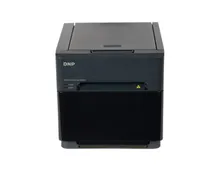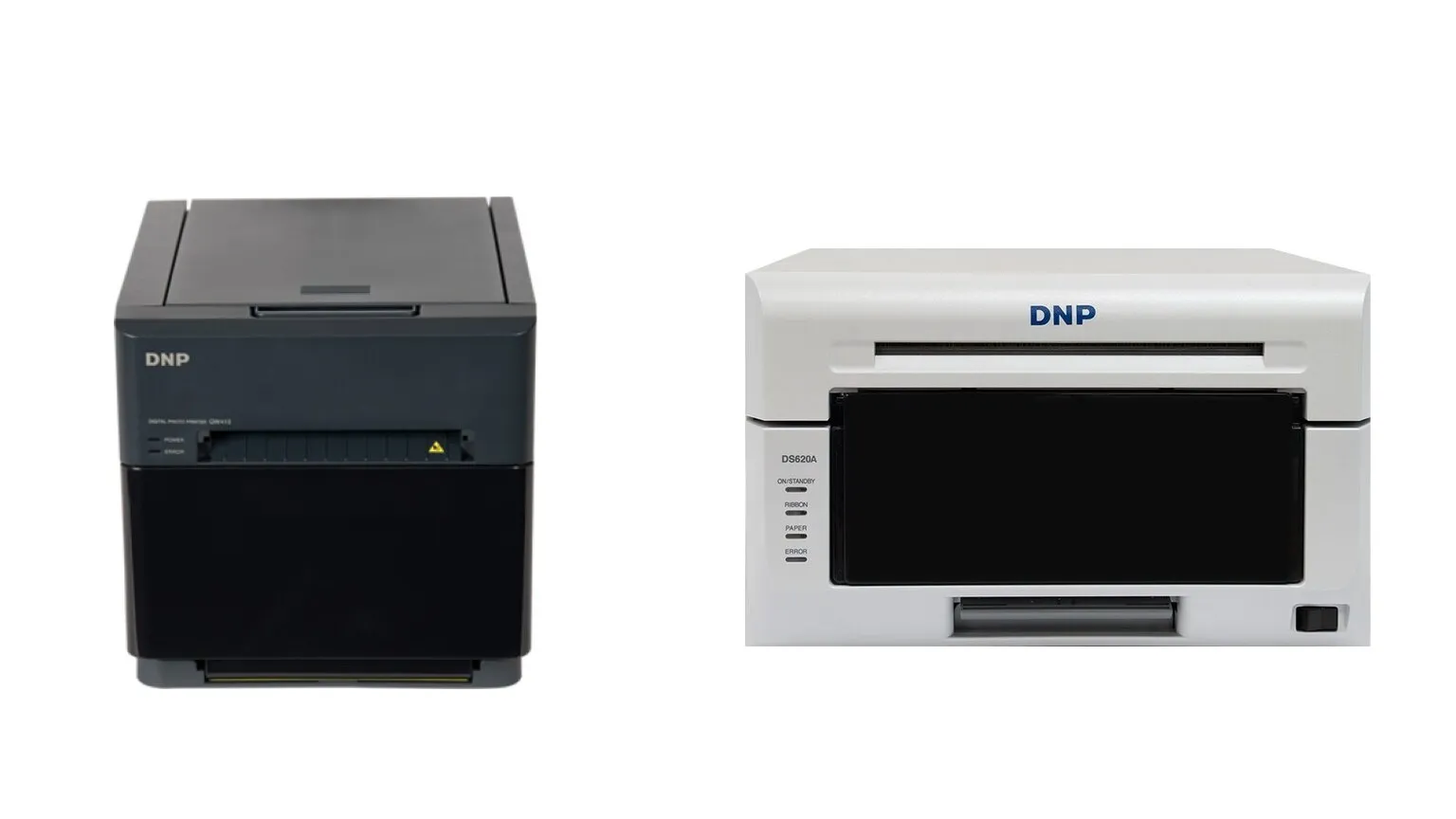
Between them these two printers cover most of the photo booth industry, and DNP QW410 vs DS620 gets decided by the print you sell, not by the spec sheet. Get the format right and the printer picks itself.
QW410 and DS620A Side by Side
The QW410 is the compact one. Small, light, built to be carried and to disappear inside a slim booth. It prints in smaller formats and it is the natural partner for mirror booths, tight venues and operators who move a lot.
The DS620, listed by DNP as the DS620A, is the workhorse. Around 12 kg, about 400 prints of 4x6 per roll, and it adds the 5x7 and 6x8 sizes corporate clients ask for. It is the printer you want when the booth lives in a van and prints all evening.
Both are dye sublimation, which is the part that decides the guest experience: prints leave the tray sealed and touchable in seconds, so nobody stands around waving a wet photo.
Decide by Print Format First
The format you hand to a guest decides everything downstream.
Classic vertical strips are the cheapest print you can deliver, because one sheet splits into two takeaways: a couple leaves with one each and your cost per guest halves. Strips suit weddings and any event where volume matters more than surface area.
Larger postcard sized prints are what corporate clients expect, because a logo needs room and the print gets pinned to a desk rather than a fridge. They cost more per guest and they photograph better on the client’s own social channels.
If your business is mostly weddings and private parties, optimise for strips. If it is mostly brand activations, optimise for the larger format. The printer follows from that decision, not the other way round.
Portability Against Endurance
A compact printer changes what venues you can take. It fits inside a slim mirror booth without a separate table, it goes up stairs in one hand, and it makes a two person setup a one person setup. That is worth real money over a season.
A larger printer earns its bulk on the nights when the queue never stops. More media on board means fewer reloads mid event, and a bigger mechanism runs long sessions without complaint. If your typical booking is four hours of continuous printing, that is the side to be on.
Cost per Print Is a Known Number
This is the useful thing about dye sublimation: media comes in fixed quantities, so you can calculate your cost per print exactly, before you quote anything. No estimates, no “it depends on coverage” as with inkjet.
Do the arithmetic once for your chosen format and carry the number into every package you sell. An unlimited prints wedding package is only safe if you know what unlimited actually costs you, which is the point made in what to charge for a photo booth.
Always buy genuine media. Third party rolls are the classic false economy of this industry: they cost less per print and then jam, band or shift colour at the worst possible moment, in front of the client who booked you.
What Neither Printer Fixes
A printer prints what it is given. If the photo arrives underexposed because the booth is lit by a venue chandelier, the print will be an accurate reproduction of a bad photo. Lighting and the camera setup decide image quality; the printer only decides how fast and how well it becomes a physical object. Fix the light before you spend anything on the printer question.
Which One to Buy
Buy the compact model if you run mirror booths, work tight venues, move alone, and sell strips at weddings and parties.
Buy the DS620A if you print postcard formats for corporate work, run long high volume events, or want the fewest possible media changes during a night. Its 400 prints per roll against the 150 of the QW410 is the whole argument.
Buy both, eventually, if you run more than one booth: they cover different jobs and the spare is worth more than the saving on the night one of them fails. Full details of the models and genuine media are on our DNP photo booth printers page.