Most operators set their first price by copying the nearest competitor and knocking ten per cent off, then spend two seasons busy and broke. How much should you charge for a photo booth is a question with an answer, and it is built from four costs you can work out this afternoon.
Start From Your Floor, Not From the Market
Your floor price is the number below which an event costs you money. It has four parts, and all four are knowable before you quote anything.
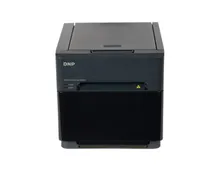
- Media. Dye sublimation media is sold per print, so your cost per print is fixed and exact. Multiply by the prints you expect to hand out. This is the only cost that scales with how busy the booth is.
- Travel. Fuel, tolls, parking and the time to get there and back. Operators consistently underprice this, because it does not feel like work.
- Time. Setup, the event itself, breakdown, and the hour afterwards spent cleaning and recharging. A four hour booking is rarely under seven hours of your day.
- Depreciation. The booth cost real money. Divide it by the number of events you realistically expect from it before it needs replacing, and carry that number into every quote. Our photo booth cost guide has the purchase side of that calculation.
Add those four and you have a floor. Everything above it is what your work is worth, and that part is a market question.
Sell Photo Booth Pricing Packages, Never Hours
A photo booth price per hour invites the client to buy fewer hours. The moment you quote a rate per hour, every conversation becomes a negotiation about how few of them they can get away with, and you have taught the client that your product is time rather than prints, an attendant and a machine that works at 11 pm.
A package that works has a spine and options: a fixed number of hours, unlimited prints or clips, the props and backdrop, custom print design with the client’s names or logo, and delivery of the gallery afterwards. Then two or three add ons that are cheap for you and feel valuable to them: an extra hour, a guest book, a second print per session, branded overlays for a corporate event.
Wedding Prices Are Not Corporate Prices
Two events, the same booth and the same four hours, quoted at different numbers, and both quotes are right. Booth pricing follows who is paying and what they are comparing you against.
Weddings are long, emotionally loaded, booked far in advance and compared against a photographer, a band and a florist. The client is spending their own money and expects the experience to be flawless. That earns your highest rate, and it is why the wedding photo booth market is where most operators build the season.
Corporate work is shorter, more predictable, and paid by someone spending a budget rather than savings. The value there is branding and the queue at the stand, not romance. Price it on the outcome the marketing team is buying, not on your hours.
The Three Mistakes That Cost the Most
Quoting before you know the venue. Stairs, no lift, a hundred metres from the loading door and a 4 pm setup window all cost you real time. Ask before you price, not after you have committed.
Bundling away your upsells. If every quote includes everything, you have nothing left to concede in a negotiation except your margin. Keep two genuine extras out of the base package so you always have something to give that is not a discount.
Competing on price against a hobbyist. Someone with a tablet on a tripod will always be cheaper. You are not selling the same thing: you are selling instant dye sublimation prints, an attendant, insurance, a machine that does not fail at 11 pm and a backup plan. Say that out loud in the quote instead of dropping your number.
Working Backwards From What You Want to Earn
There is a second version of what to charge for a photo booth, and it starts from what you want the season to pay you. Take that target, divide it by the number of weekends you will realistically work, and look at the number that falls out. If it sits far above your market, you need a format that commands more, like a 360 platform. If it sits far below, you can afford to be pickier about which bookings you take.
Either way, the figure comes out of your own diary and your own costs, which is the only place a price that holds has ever come from.